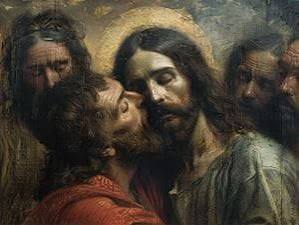
Judas Iscariot is most remembered as the disciple of Jesus Christ who betrayed him. However, his calling extended beyond that of a disciple. Jesus had many disciples—12 of whom were principal, whom he sent out—who later came to be known as apostles; Judas was one of them.
The literal meaning of the word “apostle” is “one who is sent off.”
In the Gospels, when Jesus sent out the 12, he gave them power to cast out unclean spirits and to heal all manner of sickness and disease. They were commanded to bear witness with signs and wonders and to preach that the kingdom of heaven is at hand. Matthew 10:2 designates them as apostles at that point by name. Concluding the list is Judas Iscariot, who later would betray Jesus.
Judas was sent off with the other 11, and they were given the power to cast out devils in His name. Since “Satan cannot cast out Satan,” this gives evidence to the fact that one who is called and chosen, given grace and power, and given the title of apostle, can still turn from his calling and fall from grace.
John wrote that we love God because he first loved us. Jesus will save anyone who sincerely calls upon him in truth without exception; it is written, “Whoever calls on the name of the Lord shall be saved.”
However, it is a falsehood that God’s unconditional love irresistibly locks everyone in without any conditions after forgiveness is given; rather, there is more accountability. Before salvation, we are held captive by the devil without power over sin. We cannot be truly good without Christ; it is not in us.
Christ came and shed his blood for our redemption and then rose from the grave to grant us power over sin. This is the unconditional love of God: he loved us first while we were yet in our sins. However, we must respond by loving Him in return.
Once we receive the free gift of salvation, our relationship with God has changed. No longer are we far from God, separated by a partition and in need of unconditional love. We are made near, and Christ is in us. With Him in us, we now have power over sin and the grace to love Him back through obedience to His commandments. Love is conditioned upon obeying his word. “For this is the love of God, that we keep his commandments, and his commandments are not grievous.”
Salvation does not remove accountability for sinful actions committed knowingly—nor does it bestow guaranteed entrance into heaven without responding to God’s grace. Those possessing greater knowledge face more accountability and harsher judgment if they choose the path of disobedience.

